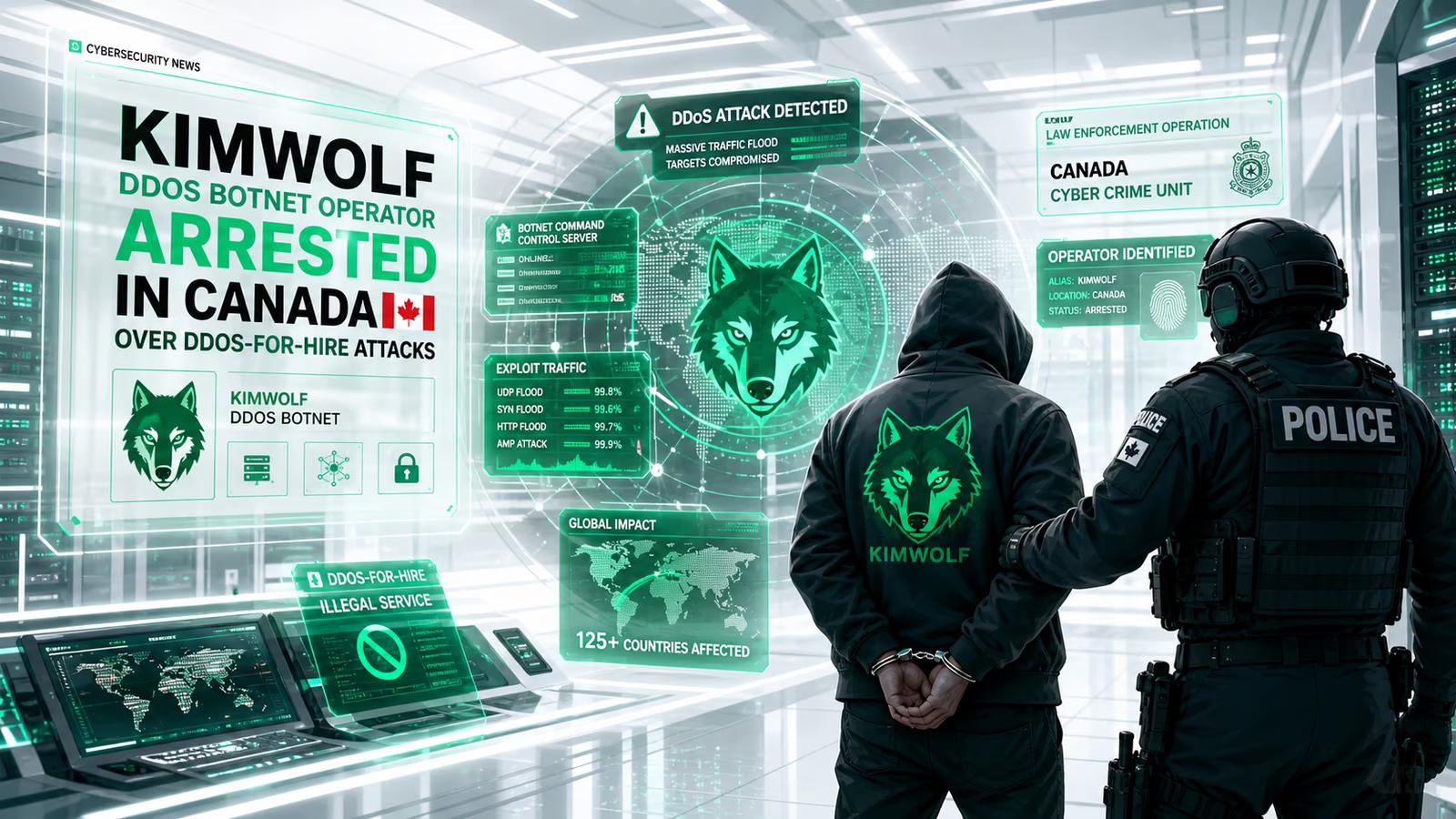
DoJ arrests Canadian operator of Kimwolf, a DDoS-for-hire botnet built as a variant of AISURU.
The U.S. Department of Justice (DoJ) announced the arrest of Jacob Butler (aka Dort), 23, Ottawa, Canada. Charges: development and operation of Kimwolf, a DDoS-for-hire botnet (a network of compromised devices rented out to flood targets with traffic on demand).
Kimwolf is assessed to be a variant of AISURU, a malware family that specializes in hijacking routers and IoT devices (IP cameras, NAS boxes, home and office routers) by exploiting default credentials and exposed management services. AISURU has a documented track record of large-scale volumetric attacks across Asia and Europe. The Kimwolf variant introduces specific modifications — full technical details haven't been published in the DoJ's initial announcement.
The operating model: Butler allegedly recruited customers through forums or private channels, accepted payment per attack, and maintained the botnet as shared reusable attack infrastructure. No specific named victims in the initial public announcement.
DDoS-for-hire botnets remain the weapon of choice for low-technical-budget threat actors. The operator handles all technical complexity; the customer just needs a target and cash. That model brings destructive-scale attacks within reach of anyone.
AISURU variants have hit 100+ Gbps traffic peaks — enough to saturate most services without dedicated anti-DDoS protection. The primary infection vector is hardware running default credentials or management interfaces (Telnet, HTTP admin, TR-069) exposed directly to the internet.
Butler's profile fits the standard pattern: young operator, technically capable, underestimating traceability. The DoJ has built solid operational experience coordinating with ISPs and registries to identify botnet administrators even through anonymization layers. Canadian jurisdiction — cooperative with U.S. law enforcement — made the case more tractable.
The defensive takeaway: your own infrastructure may be part of the botnet without you knowing. A compromised router participates in attacks against third parties while your outbound traffic looks unremarkable.
Butler's arrest is a solid win, but Kimwolf doesn't disappear with one operator down: secondary operators or absorption by another actor can happen within days. Keep defenses active regardless of who gets charged.
Help more people discover BBLabs News.
Want to get news like this every day?
Browse all articles