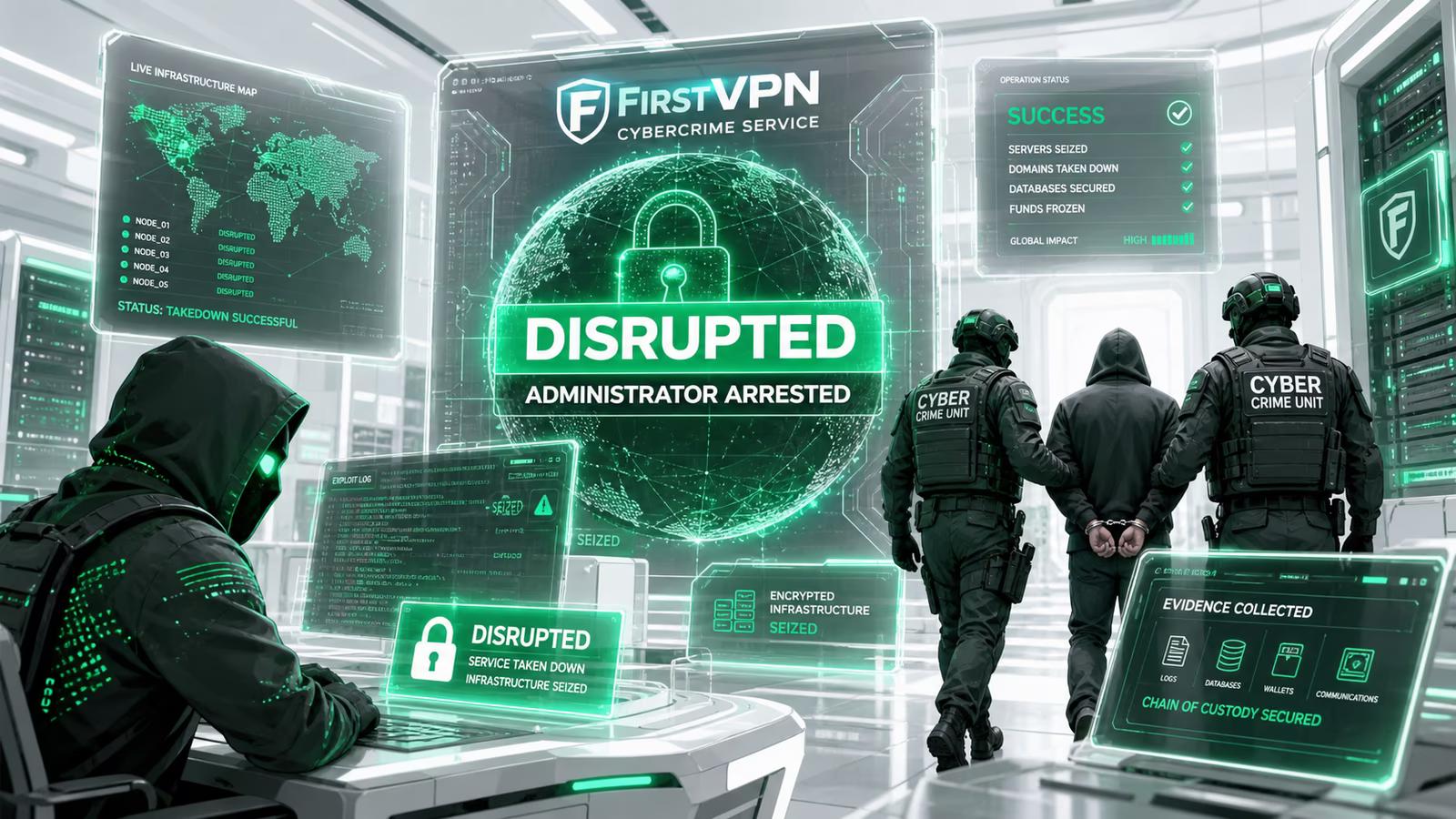
FBI shut down First VPN, a criminal VPN service used by dozens of ransomware groups for network reconnaissance and corporate intrusions.
First VPN was a criminal-oriented VPN service — not a consumer privacy tool. It operated as bulletproof hosting (infrastructure designed to resist legal takedowns and ignore law enforcement requests), providing anonymization to malicious actors.
The FBI, working with international partners, dismantled the infrastructure and arrested the administrator. Service domains were seized and First VPN is now offline.
According to the FBI, dozens of ransomware groups were actively using the service for two specific operations: *network reconnaissance* (scanning corporate networks, identifying exposed services, and mapping assets before an attack) and direct network intrusions.
That positions it as mid-to-high tier criminal infrastructure — not a C2 (server that controls compromised machines) or exploit kit, but the anonymization layer protecting pre-attack operations.
Infrastructure takedowns have real but limited impact. First VPN delivered something concrete: an OPSEC (operational security measures attackers use to avoid attribution) layer separating ransomware operators' real IPs from victim networks.
Without it, *reconnaissance* and intrusions are more exposed to defender detection. That's valuable short-term.
But the criminal ecosystem has redundancy. Groups that relied on First VPN aren't stopping. They'll pivot to equivalent services within days or weeks. The market for criminal VPNs and SOCKS proxies (proxies that redirect network traffic without modifying data, hiding the real origin) is wide and fragmented.
What does change: IOCs (technical indicators that reveal an attacker's presence) tied to First VPN infrastructure are now burned. If you had alerting on those IP ranges, you can confirm they won't be used for criminal activity. But the threat doesn't disappear.
The most notable aspect of this case: the FBI identified and arrested the actual administrator. That means the operation had enough forensic visibility to attribute the service to a real person. Bulletproof hosting operators are not untouchable.
The administrator's arrest signals to other bulletproof service operators that attribution is achievable even through shared infrastructure. For defenders, the real value is in the post-takedown window — review historical logs before attackers rebuild their OPSEC.
Help more people discover BBLabs News.
Want to get news like this every day?
Browse all articles