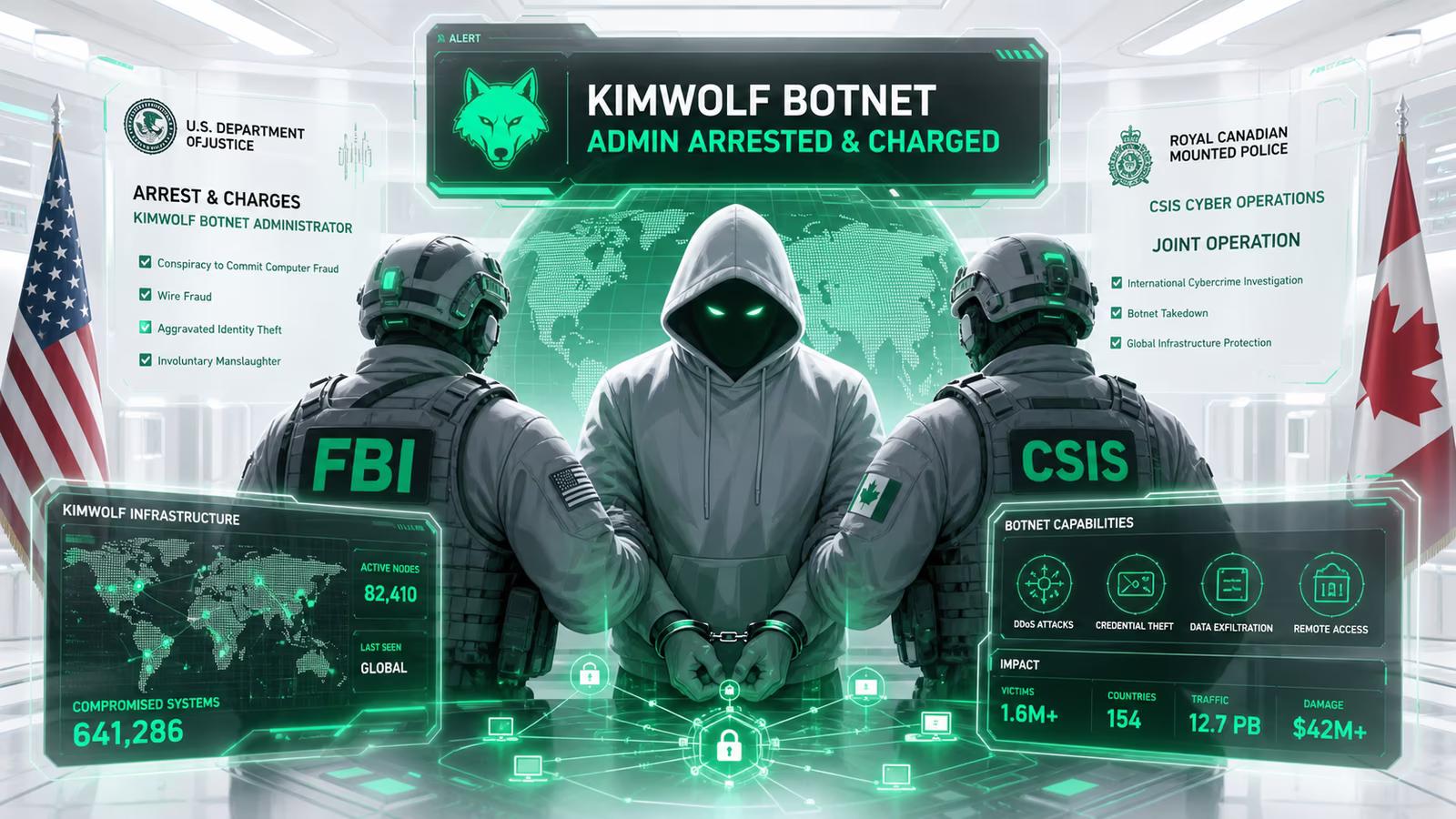
US and Canadian authorities charged a Canadian national for running KimWolf, a DDoS botnet that infected nearly two million devices worldwide.
US and Canadian authorities arrested and formally charged a Canadian national for operating KimWolf, a botnet (network of compromised devices controlled from a centralized server) built to launch DDoS attacks (traffic floods that knock servers offline). The network infected nearly two million devices globally.
The operation is a joint effort across both North American jurisdictions. The suspect allegedly acted as the primary administrator of the infrastructure, managing the C2 (command-and-control server directing infected machines) and either selling attack capacity or weaponizing the botnet directly.
Nearly two million infected devices is significant scale. A botnet of this size generates enough traffic to take down critical infrastructure or sustain extortion campaigns against businesses. KimWolf fits the DDoS-for-hire (booter/stresser) model — a criminal business that keeps resurging despite repeated takedowns.
Operationally relevant: infected devices are typically unpatched home routers, IP cameras, or NAS units. The owner usually has no idea. Botnet cleanup after an arrest is not automatic — devices stay compromised until someone resets or patches them.
The US-Canada joint charges suggest infrastructure and victims were identified on both sides of the border. Public IOC (Indicators of Compromise — technical fingerprints that reveal an infection) tied to KimWolf's C2 nodes are likely to drop in the coming days.
Botnet admin arrests rarely kill the threat immediately — infrastructure can stay live or get absorbed by other actors. Track the IOCs when they drop.
Help more people discover BBLabs News.
Want to get news like this every day?
Browse all articles